
Resources
Care Options
Perimenopause-informed care recognizes that there is no single solution for everyone. Some people benefit from hormone therapy, others from non-hormonal medical care, integrative approaches, or lifestyle-based support. Many find relief through a thoughtful combination.
Informed care means understanding options, risks, benefits, and being supported in making choices that align with your body and values.
Peri/Menopause Directory →
Find a US or international provider.
Telehealth Provider
Midi Health
Alloy Health
HRT Club
Naturopathic Care & Treatment
24/7 Peri-Menopause Care →
Accessible prescription care for perimenopause and menopause in 30+ sates.
Use the Balance App
Balance is a free, evidence-based app which educates and empowers women about their hormones and their future health, with trustworthy information that doesn’t dismiss, minimize or leave women guessing.
How the Balance app supports you:
Track your symptoms
Access expert content
Download your own Health Report
Feel informed about your health
Also available in Spanish!
Resources
Curated books, podcasts, education, and practical tools to support informed, empowered decision-making.
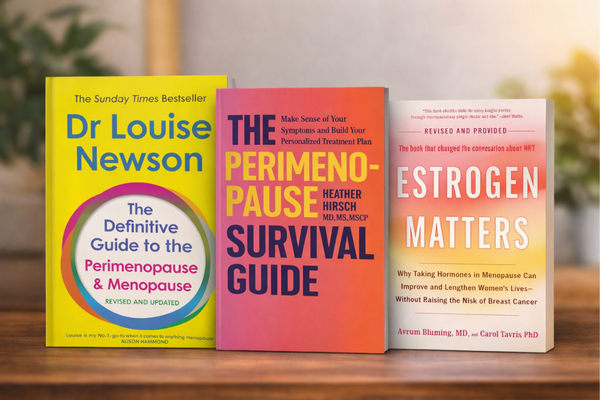
Books
- The Definitive Guide to the Perimenopause and Menopause →
- The Perimenopause Survival Guide →
- Estrogen Matters →
- The New Perimenopause →
- Unbreakable →
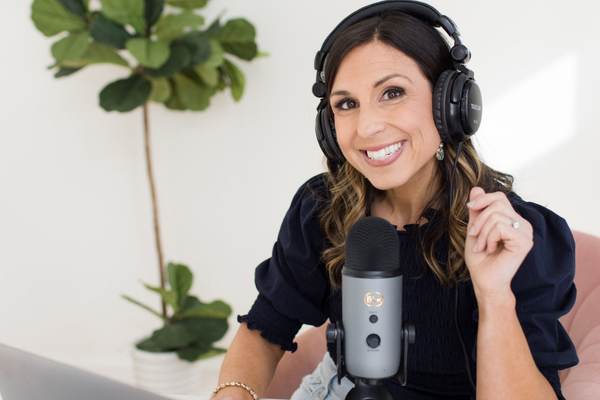
Podcasts
- The Dr. Louise Newson Podcast →
- Health by Heather Hirsch →
- The Second Opinion →
- Dr. Streicher’s Inside Information: Menopause, Midlife, and More →
- You are not Broken →
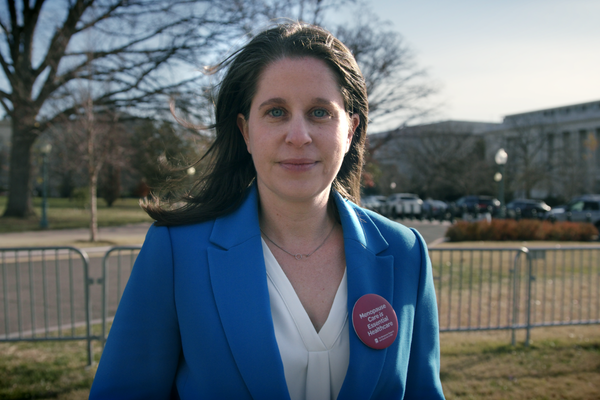
Education for Providers
- Learn How to Prescribe Hormone Therapy (with Dr. Rachel Rubin) →
- Heather Hirsch Academy →
- Learn to Treat UTIs with Vaginal Hormones (with Dr. Rachel Rubin) →
- Newson Education (UK) →

Support & Self-Advocacy
- Balance App: Education, Community, Journal →
- Wake Her Up Community →
- A Citizen Guide to Menopause Advocacy→
- FDA Statement on Removal of Misleading Warnings on HRT →
- Let’s Talk Menopause →
Living in Balance
Ongoing conversations for your journey
Living in Balance is a raw, honest podcast for anyone navigating a body, a mind, and a world that sometimes feel out of sync.
Hosted by Jain monks and award-winning filmmakers Sadhvi Siddhali Shree and Sadhvi Anubhuti, this women’s health and healing podcast explores what balance really looks like in modern life, especially during seasons of change like perimenopause, menopause, and mental burnout.
Through unscripted dialogue, the show bridges science and spirituality, lived experience and ancient wisdom. Conversations explore hormone health, trauma healing, mental wellness, resilience, purpose, and the deeper questions that arise in midlife.
This is not about having it all figured out. It is about telling the truth, listening deeply, and learning how to live and heal with greater awareness and compassion.
Questions People Ask After Watching BALANCE
After watching BALANCE, many people are left with questions—about their bodies, their minds, and what support truly exists. This space offers grounded responses to some of the most common questions we hear.
How do I know if I’m in perimenopause?
Perimenopause often begins years before menopause, commonly in the late 30s or 40s. It is marked by fluctuating hormones rather than a steady decline, which is why experiences vary so widely. Changes in menstrual cycles, sleep, mood, anxiety, energy, focus, and how the body responds to stress are often early signals.
Standard hormone blood tests may appear “normal” during perimenopause because hormone levels can rise and fall dramatically from day to day. For this reason, lab results alone are rarely diagnostic.
That said, some people begin to notice shifts in broader blood markers during this transition, such as changes in cholesterol, blood sugar regulation, inflammation markers, or emerging nutrient deficiencies. These changes do not confirm perimenopause on their own, but they can reflect the body’s changing hormonal landscape and offer helpful context when symptoms are present.
Perimenopause is best understood through patterns over time, including how you feel, how your cycles change, and how your body responds, rather than through a single test result.
Why is it so difficult to access hormone therapy?
In addition, regulatory complexity, lack of provider education, and inconsistent insurance coverage can create barriers, leaving many people to advocate strongly for care that should be routine.
What should I do if my provider refuses to prescribe hormone therapy?
You have the right to ask why a treatment is being declined, what evidence is guiding that decision, and whether a referral to a menopause-informed provider is available. Advocacy is not confrontation. It is a necessary part of navigating a system that has not prioritized this stage of life.
Does insurance cover hormone therapy?
It is common for coverage to require prior authorization, which can delay care but does not necessarily mean treatment is unavailable.
What is the difference between synthetic hormones and bioidentical hormones?
Synthetic hormones are also made in a lab, but their chemical structure differs from the body’s natural hormones and may interact with receptors differently.
Neither option is universally better. Many FDA-approved hormone therapies use bioidentical hormones, and synthetic hormones may be appropriate in certain cases. What matters most is how the hormone works in your body, how it is dosed, and whether care is guided by a knowledgeable provider.
What natural herbs are shown to help ease perimenopause or menopause symptoms?
Some herbs have been studied for their potential to support hormonal balance and ease symptoms such as hot flashes, mood changes, sleep disruption, and stress. Responses vary, and herbs work best when chosen thoughtfully and used with guidance.
Commonly referenced herbs include black cohosh for hot flashes, night sweats, and sleep support, and ashwagandha for stress regulation, anxiety, and fatigue. Rhodiola has been studied for stress resilience and energy, while maca may support mood, libido, and overall well-being. Chasteberry (Vitex) is sometimes used to support cycle-related symptoms during early perimenopause.
Herbs are not risk-free and may interact with medications or be inappropriate for certain health conditions. They are best viewed as supportive tools rather than replacements for medical care. Consulting a knowledgeable provider can help determine what is appropriate for your body and stage of transition.
Why is it so hard to find perimenopause or menopause providers who truly understand it?
This gap in training means that even well-meaning providers may lack the knowledge or confidence to offer appropriate treatment options, including hormone therapy.
This gap in training means that even well-meaning providers may lack the knowledge or confidence to offer appropriate treatment options, including hormone therapy.
How do I know if my provider can be trusted with my perimenopause journey?
A perimenopause-informed provider listens without dismissing symptoms, understands that labs do not tell the whole story, and is willing to discuss both hormonal and non-hormonal options openly. They welcome questions, explain risks and benefits clearly, and respect your values and preferences.
Trust is built when care feels collaborative rather than rushed or patronizing.
Is there affordable menopause or perimenopause care available?
Yes. While access can be uneven, there are emerging models focused on affordability and education. One option is Flourish, founded by Dr. Heather Hirsch, which offers menopause-informed care through the Flourish app. Telehealth platforms like this can help bridge gaps for those without local access to trained providers.
Why is hormone therapy so expensive?
In many cases, hormone therapy should not be prohibitively expensive. Most FDA-approved hormone therapies are covered by insurance, though coverage varies by plan and may require prior authorization.
For those paying out of pocket, costs can often be reduced significantly. Vaginal estradiol through the Mark Cuban Cost Plus Drug Company is commonly available for around fourteen dollars per month. Testosterone gel such as AndroGel may range from forty to sixty dollars depending on dosage and pharmacy. Oral progesterone is often available for under twenty dollars.
Prescription discount programs such as GoodRx and similar pharmacy coupons can also lower costs substantially, even for those with insurance.
In contrast, some medspas or concierge-style practices offer hormone pellets, which involve a medical insertion procedure and ongoing monitoring. These treatments are often significantly more expensive and are typically not covered by insurance. While pellets may be appropriate in limited circumstances, they are not the only option and are not necessary for most people.
There are safer, well-studied, and more affordable hormone therapy options available. Understanding the full range of choices can help individuals avoid unnecessary costs while still receiving effective care.
How do I know if I need hormone therapy or birth control?
The choice depends on symptoms, age, health history, cycle patterns, and individual goals. A knowledgeable provider can help determine which option aligns best with your needs.

At Home Body Composition
A clearer way to understand your changing body
Perimenopause and menopause can bring changes that are not always reflected by weight alone. Shifts in muscle, fat, and hydration often happen quietly, even when the scale stays the same.
InBody at Home scales offer insight into body composition, helping you better understand what is actually changing in your body during this phase of life. Having this information at home can support a more informed and compassionate approach to health, focused on awareness rather than judgment.
InBody at Home scales can help you:
- Track muscle, fat, and hydration, not just weight
- Notice long-term trends during hormonal change
- Make more supportive choices for strength and overall well-being
We see tools like this as a way to listen to the body more closely and respond with greater care.

A Perimenopause Journey
Disclaimer: BALANCE: A Perimenopause Journey, the series and website, is for educational and informational purposes only and is not a substitute for professional medical advice, diagnosis, or treatment. Always seek the guidance of a qualified healthcare provider regarding any medical condition or decision.
COPYRIGHT © 2023-PRESENT – BALANCE BY SIDDHAYATAN TIRTH PRODUCTIONS
A 501C3 NON-PROFIT PRODUCTION ORGANIZATION FEIN: 83-4496803
Perimenopause, Menopause, Post-Menopause Documentary Series.